How to Get Papers for a Dog When the Originals Are Lost
Lost Your Dog’s Papers? You Still Have Options
Few things cause more anxiety for a dog owner than realising the original registration documents, health records, or purebred certification have gone missing. Whether you moved and the file box got misplaced, a previous owner handed over the dog without paperwork, or you simply let the file drawer get too messy, you are not alone. Every year, thousands of people need to get papers for a dog whose official records have vanished. The good news is that the process is almost always solvable, though it does require some legwork and a willingness to call a few offices.
I have helped friends and family work through this exact problem more times than I care to count. The steps vary depending on whether you need breed registration, proof of ownership, health records, or simply a replacement for a lost certificate. Below is a practical guide that should get you through the process without tearing your hair out.
Start With What You Already Have
Before you contact any agency, pull together whatever scraps of evidence you still own. A rabies vaccine tag from the vet, a microchip registration number, an old photo of the dog with a breeder, a receipt from a pet store, or a spay-neuter clinic invoice. All of these are useful when you need to get papers for a dog and the official versions are gone. They establish a chain of ownership and a history of care. Even a dated photograph showing the dog wearing a collar with a city license tag can help.
The goal is to assemble enough evidence that a government agency or a registry like the American Kennel Club can match your dog to its records. If the dog is microchipped, that is often the strongest single piece of proof. A microchip registered to your name and address is nearly impossible for someone else to claim. If you have never checked that the chip is registered to you, do that first. Many chips are implanted at a veterinarian clinic but never transferred to the new owner, which can cause headaches later.
Contact the Original Registry or Agency
If your dog was registered with a specific breed club, a county clerk, or a municipal pet database, start by calling that office. Explain that you have a lost certificate and need to request a duplicate. Most agencies have a standard form for this. You may need to provide an owner affidavit swearing that you are the legal owner and that the original document was lost or destroyed. Some will also require a notarised statement. Expect to pay a registration fee for the replacement, usually a small amount that covers administrative costs.
For purebred dogs registered with the American Kennel Club, the process is straightforward. You can request a duplicate registration certificate directly from AKC reunite services. They will ask for the dog’s registered name, your name as it appears on the original registration, and proof of identity. If the dog was never registered with AKC but has a breeder contract, you can sometimes use that contract as the basis for a new registration. The breeder contract should list the dog’s sire and dam, birth date, and litter number. That is enough for the club to issue a new certificate, provided the breeder is still in business and can confirm the details.
What If the Dog Was Never Registered at All?
This happens more often than you might think. A friend of mine adopted a mixed-breed dog from an animal shelter. The shelter gave her a vaccination record and a spay-neuter certificate but no breed registration or ownership document. Later, when she needed to prove the dog was hers for a dispute with a neighbour, she had nothing official. She had to get papers for a dog that had never had papers in the first place.
In that situation, the most practical route is to create a new paper trail. Start with your veterinarian. Ask for copies of every visit, including the rabies vaccine certificate and any DNA test results if the vet offers that service. A DNA test can serve as a powerful identifier because it links the dog to you through the clinic’s records. It is not cheap, but it is definitive. If the dog is microchipped, make sure the chip is registered to you in the pet database. If it is not, the vet can scan the chip and help you update the registration online.
Next, check with your local government agency that handles animal licensing. Many cities and counties require annual license renewal for dogs. If you have been paying that fee, there is a record somewhere. Provide your name and address, and they can often locate your dog in their system and issue a duplicate license tag. That tag, combined with a current rabies vaccine certificate, gives you a credible set of documents.
The Role of the Breeder or Pet Store
If you bought the dog from a breeder, contact them directly. Reputable breeders keep records of every litter. They can issue a duplicate breeder contract or a letter confirming the sale. This is especially important if you need purebred certification for showing or breeding. The breeder may also have kept a copy of the original registration that they filed with the American Kennel Club. Even if the breeder is no longer active, they might have passed their records to a successor or to a breed club.
Pet stores are a bit trickier. Some keep detailed records; others do not. If you have a receipt or a credit card statement showing the purchase, that can serve as proof of ownership. A pet store that belongs to a national chain may have a central customer database. Call the corporate office and ask for a copy of the purchase record. Expect to provide your name, the date of purchase, and any identifying information about the dog, such as its microchip number or a description of its markings.
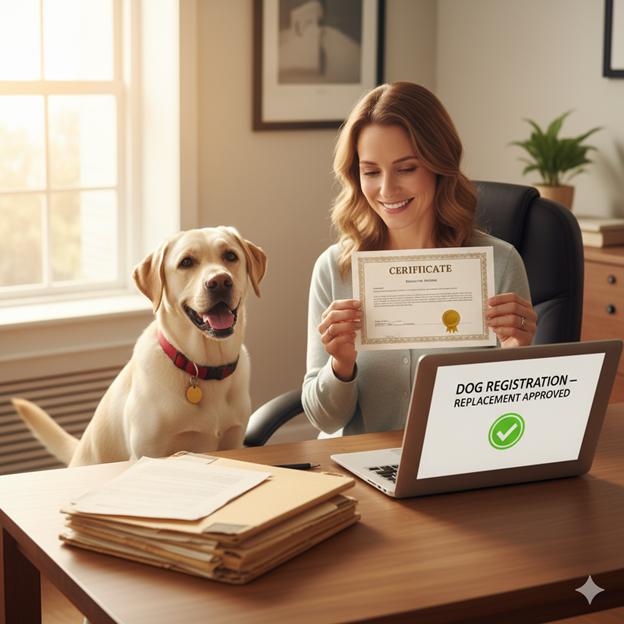
Alternative Proof When Official Documents Are Gone
Sometimes you cannot get a duplicate from the original source. The breeder may have died, the pet store may have closed, or the county clerk may have purged old records. In those cases, you need to build a case from multiple smaller pieces of evidence. An owner affidavit is a good start. Write a sworn statement describing when and where you got the dog, what you paid, and any witnesses to the transfer of ownership. Have it notarised.
Collect supporting documents: a rabies vaccine certificate from your vet, a spay-neuter certificate, a microchip registration, a DNA test report, a photograph of you with the dog at the animal shelter on adoption day, or a letter from a previous veterinarian. The more pieces you have, the stronger your claim. Some jurisdictions accept a combination of these as sufficient for license renewal or for establishing ownership in a dispute.
I once helped a colleague who had inherited a dog from a deceased relative. The relative had no will and no paperwork for the dog. The colleague had to get papers for a dog that had essentially no paper history. We ended up using a combination of a notarised owner affidavit, a microchip registration that we updated to her name, and a letter from the relative’s former veterinarian confirming the dog’s identity. It took about three weeks, but the county clerk accepted the package and issued a new license.
Digital and Paperless Options
More agencies are moving toward paperless proof. The American Kennel Club now offers digital registration certificates that you can store on your phone. Some local governments let you access your dog’s license record through an online pet database. If you have a microchip, the chip company’s online portal serves as a permanent record of ownership. These digital options are convenient, but they still depend on you having created the account and uploaded the information. If you have not done that, you will need to start from scratch.
If you are dealing with a lost certificate from a government agency, ask whether they accept electronic submissions. Many county clerks now allow you to upload a scanned owner affidavit and supporting documents, pay the registration fee online, and receive a PDF of the new certificate by email. That saves a trip to the courthouse and reduces the risk of losing the replacement.
Preventing the Problem From Happening Again
Once you have your new documents, make copies. Keep a physical folder in a fireproof safe, and store digital scans in a cloud service or on a password-protected hard drive. Register the microchip in your name and keep the account information current. If you move, update the address with the chip company and with any agency that holds your dog’s registration. And every year when you handle license renewal, take a minute to check that all your records are still in order.
Losing papers is frustrating, but it is rarely the end of the world. With a little persistence and the right combination of records, you can rebuild your dog’s paper trail. The key is to start early, gather everything you can find, and be honest about what you do not have. The people who process these requests deal with lost documents every day. They will work with you if you show that you are making a good faith effort.
For anyone facing this situation, the most important advice is this: do not wait. The longer you delay, the harder it becomes to track down old records. A breeder may retire, a vet clinic may close, or a government agency may purge its files. Act now, and you will save yourself a lot of trouble later.